
TEBAR Test Belgelendirme Araştırma ve Geliştirme Tic. A.Ş. Organised an Interlaboratory Comparison Test
INTERLABORATORY COMPARISON (ILC) TESTS UNDER TEBAR A.Ş.
Interlaboratory comparison is the organisation, performance and evaluation of tests by two or more laboratories on the same or similar test items under predetermined conditions.
Interlaboratory comparisons can be used for many purposes by programme participants and other parties. As described below, interlaboratory comparisons are used:
a. To determine the performance of individual laboratories for specific tests and measurements and to monitor their continuing performance,
b. To identify problems in laboratories and initiate corrective actions, for example regarding individual staff issues and the calibration of measuring instruments,
c. To establish the comparability and effectiveness of new test or measurement methods and, similarly, to monitor established methods,
d. To provide additional confidence to laboratories' customers,
e. To identify differences between laboratories,
f. To determine the performance characteristics of a method, generally known as collaborative trials,
g. To assign values to reference materials (RM) and determine their suitability for use in specific tests and measurement procedures
.
Interlaboratory comparisons (ILC) and proficiency testing (PT) are important tools for evaluating the technical competence of calibration/testing laboratories. This is also stated in TS EN ISO/IEC 17025 and the TÜRKAK document. TÜRKAK requires accredited laboratories, or laboratories applying for accreditation, to participate in proficiency testing programmes and/or interlaboratory comparison tests relevant to the measurement quantities in their accreditation scope and to obtain successful results.
TEBAR A.Ş. organised a national interlaboratory comparison test for TS EN 826: Determination of Compressive Strength. A total of 16 laboratories, including two accredited laboratories, participated.
Evaluation of Performance:
The results were evaluated by TEBAR A.Ş. using the z-score method. For the calculation of the z-score, the mean of the participating laboratories' test results was used as the reference value, and the standard deviation of the participating laboratories' test results was used as the target standard deviation.
z-Score
z-scores were calculated using the following equation.

X: Reference value (mean of the participating laboratories' results),
x: Participating laboratory's result,
s: Target standard deviation (standard deviation of the participating laboratories' results)
| ||||||
|
A.Ş.'s Interlaboratory Comparison Test Result for TS EN 826: Determination of Compressive Strength:
Our laboratory participated in the interlaboratory comparison tests for TS EN 826: Determination of Compressive Strength, organised under the coordination of TEBAR A.Ş. on 13–20 March 2009, to assure the quality of tests performed within our Quality Management System and determine our laboratory's performance.
The ILC results table for TEBAR Test Belgelendirme Araştırma ve Geliştirme Tic. A.Ş. is presented in Table 1, and the z-score distribution of compressive strength results is presented in Figure 1.
Organiser | Date | Product Type | Test Method | z-score | Comment |
TEBAR A.Ş. | March 2009 | Expanded Polystyrene Foam (EPS) | TS EN 826: Determination of Compressive Strength | 0,241 | Successful |
Table 1: TEBAR Test Belgelendirme Araştırma ve Geliştirme Tic. A.Ş. ILC Results Table
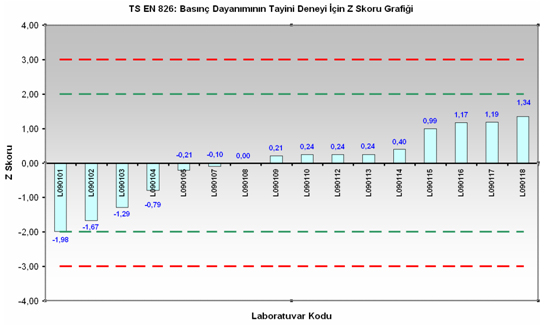
Figure 1: z-score Distribution of Compressive Strength Results
We thank the company representatives who provided every assistance during the comparison test, and all laboratories that took part in the cooperation for this organisation.
Date: 4/1/2009